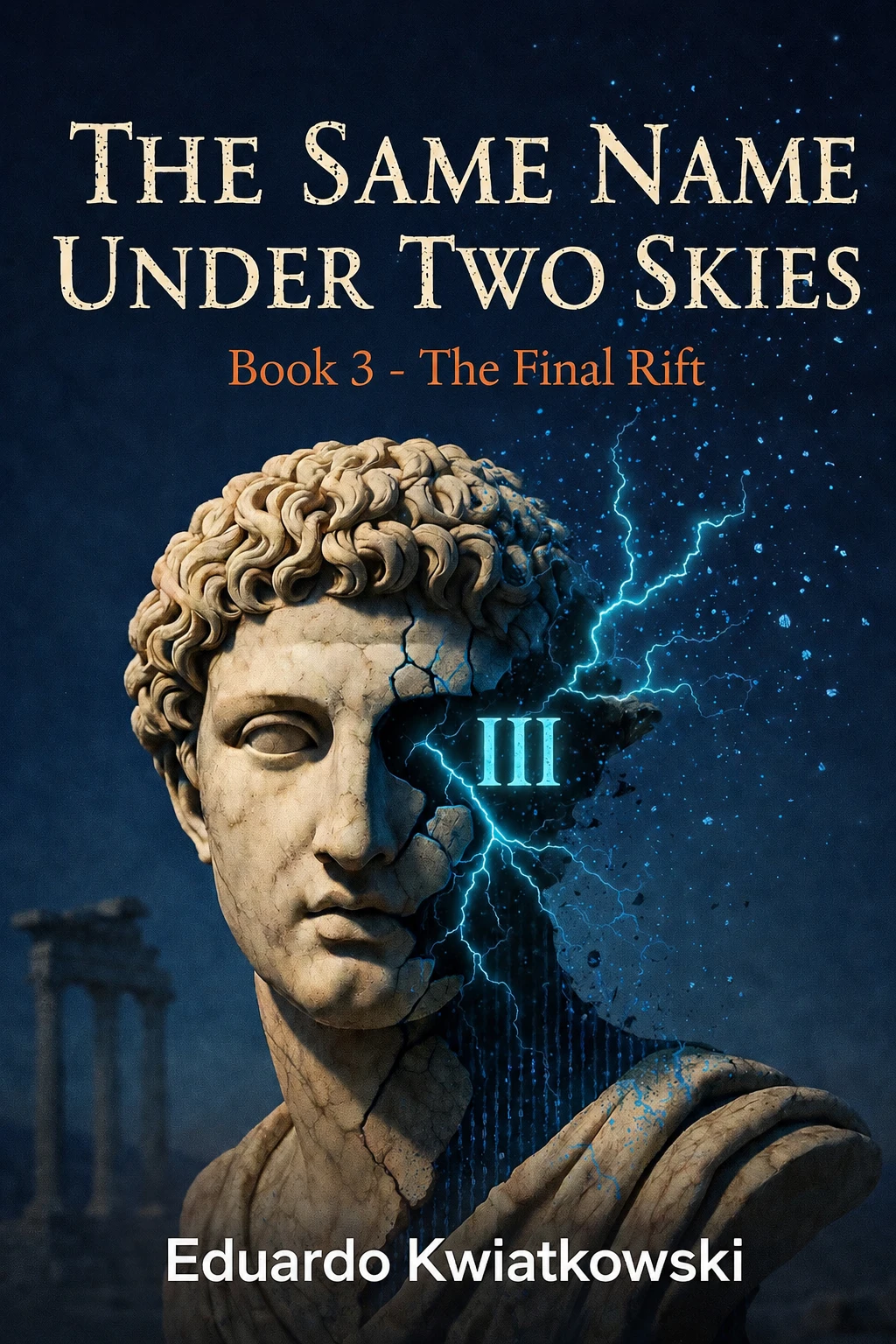
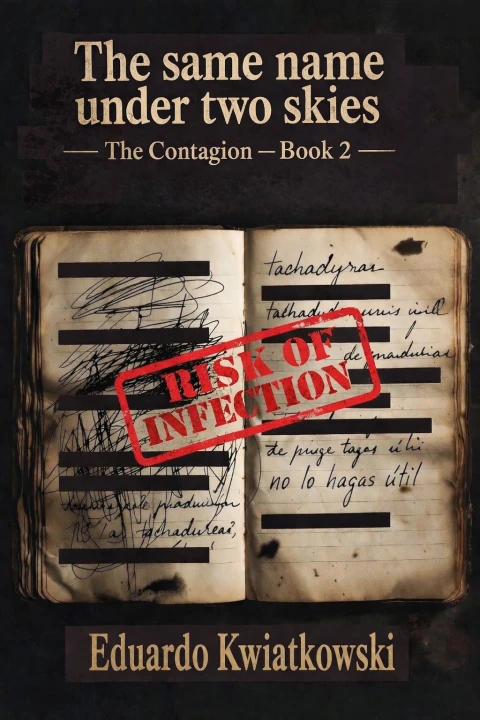
The past is changing. And it is not asking permission. In Trieste, historian Marcus Vukovius prints the same article three times — and gets three different texts. Footnotes drift. Dates dissolve. A man he spoke with a month ago has been dead, on paper, since 1994. His own memories are next. Seventeen centuries away, Marko Vuković — a soldier who carried the mud of 1991 into another man's body — operates from the heart of imperial Rome. As a Frumentarius inside the Tabularium, he has learned that the Empire's deadliest weapon is not the sword. It is the archive: the wax, the seal, the column where a family stops being people and becomes a number. He can no longer bring the system down. So he attempts something quieter, and far more dangerous: teaching it to doubt. A syllable slipped into an edict. A weight misrecorded on the docks. And, planted in the core of the record, one impossible identity — valid and invalid at once — that no official will ever be able to close. But every line he moves erases something on the other side of time. And the voice in the water begging him to stop is the one man who shares his name. The Final Rift concludes The Same Name Under Two Skies, a trilogy about memory, identity, and the quiet violence of paperwork — where victory does not arrive as an explosion, but as erosion.
-720.webp)
-720.webp)